
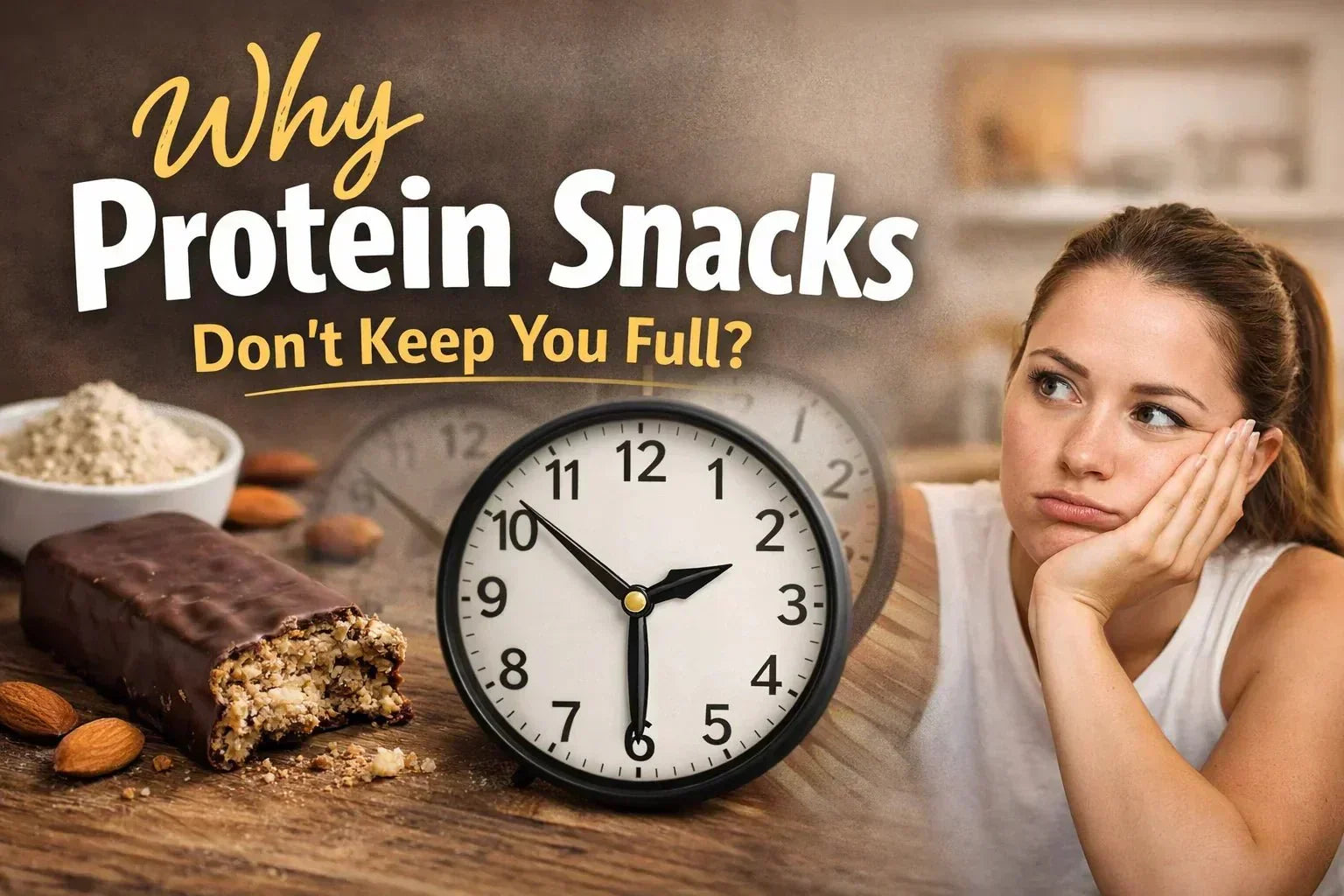
Why So Many Protein Snacks Don’t Actually Keep You Full
The Protein Snack Paradox
Protein is well known for helping people feel full longer — yet many protein snacks leave people hungry again within an hour. This leads to frustration, constant snacking, and confusion about whether protein really works.
The issue usually isn’t protein itself.
It’s how that protein is delivered.
Not All Protein Is Equal
Many protein snacks rely on ingredients that look good on a nutrition label but don’t support lasting fullness, such as:
- Highly processed protein isolates
- Artificial binders and fillers
- Sweeteners that can spike appetite
- Low-quality fats that digest quickly
Even if the label shows a high protein number, the body doesn’t always respond the same way it would to protein from whole-food sources.
Protein quality, digestion speed, and ingredient context matter.
Why You Get Hungry Again So Fast
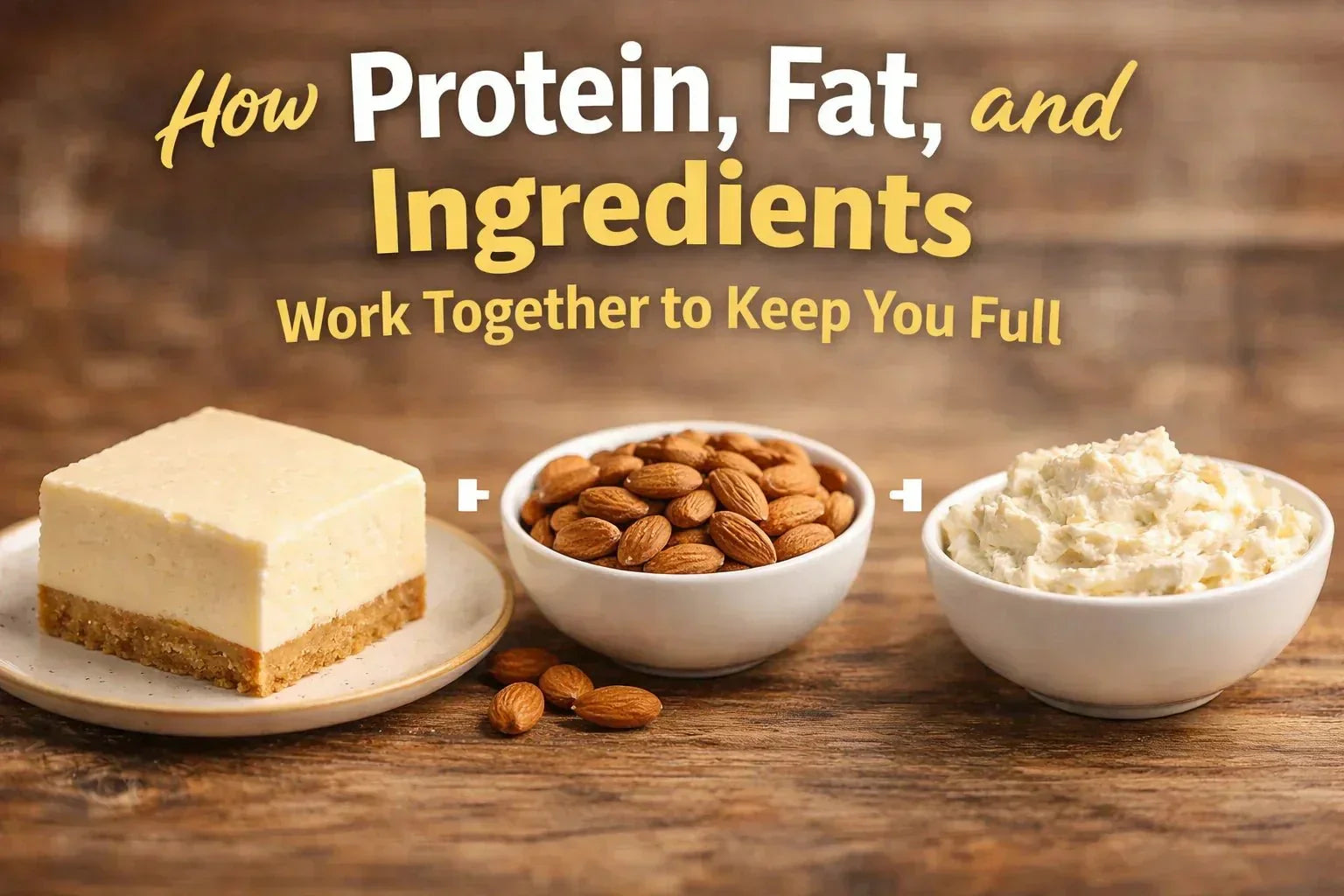
Protein doesn’t work in isolation. Understanding how fat, ingredient quality, and digestion speed influence fullness helps explain why some snacks are more satisfying than others — which we explore further in our guide on how protein, fat, and ingredients work together to keep you full.
There are three main reasons protein snacks often fail to satisfy:
1. Ultra-fast digestion
Highly processed protein powders can digest quickly, leading to a short-lived fullness response.
2. Lack of supportive fats
Protein works best alongside natural fats, which slow digestion and help extend satiety.
3. Artificial ingredients that confuse appetite signals
Some sweeteners and fillers can interfere with normal hunger cues, leaving people feeling unsatisfied even after eating.
The Role of Whole-Food Protein
Whole-food protein sources digest more gradually and work in harmony with the body’s natural satiety hormones.
When protein is paired with:
- Real fats
- Minimal processing
- Simple, recognizable ingredients
…it tends to keep people fuller, longer.
This is why some snacks feel more substantial — even when the calorie count is similar.
Why Texture and Density Matter
Soft, airy, ultra-light snacks don’t signal fullness the same way denser foods do.
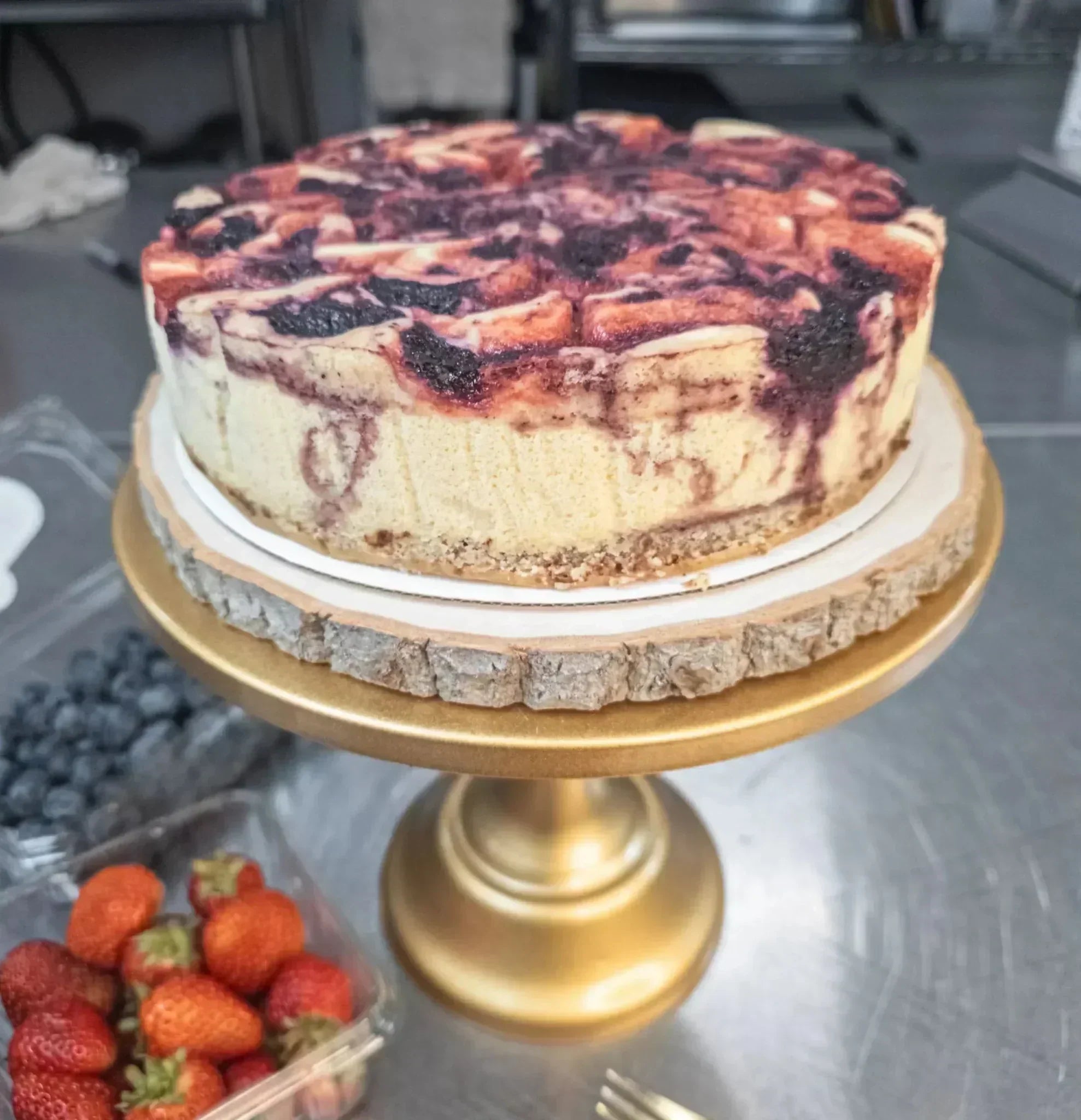
Cheesecake-style protein snacks, baked bars, and muffins made with whole ingredients often provide:
- Slower digestion
- Greater satisfaction
- Fewer cravings shortly after eating
This isn’t about eating more — it’s about eating smarter.
Reading Labels Beyond the Protein Number
Instead of focusing only on grams of protein, look at:
- Ingredient simplicity
- Type of protein used
- Presence of artificial fillers
- Whether fats come from whole-food sources
A shorter ingredient list often supports better satiety.
A Smarter Way to Snack
Protein snacks should support steady energy — not create a hunger loop.
When snacks are made with clean ingredients and thoughtfully chosen protein sources, they do what protein is supposed to do: help you feel satisfied.
That’s the difference between a snack that looks good on paper and one that actually works in real life.
Final Thought
If protein snacks haven’t worked for you in the past, the answer isn’t more protein.
It’s better protein, better ingredients, and better formulation.

Leave a comment
This site is protected by hCaptcha and the hCaptcha Privacy Policy and Terms of Service apply.