
Article: How Protein, Fat, and Ingredients Work Together to Keep You Full
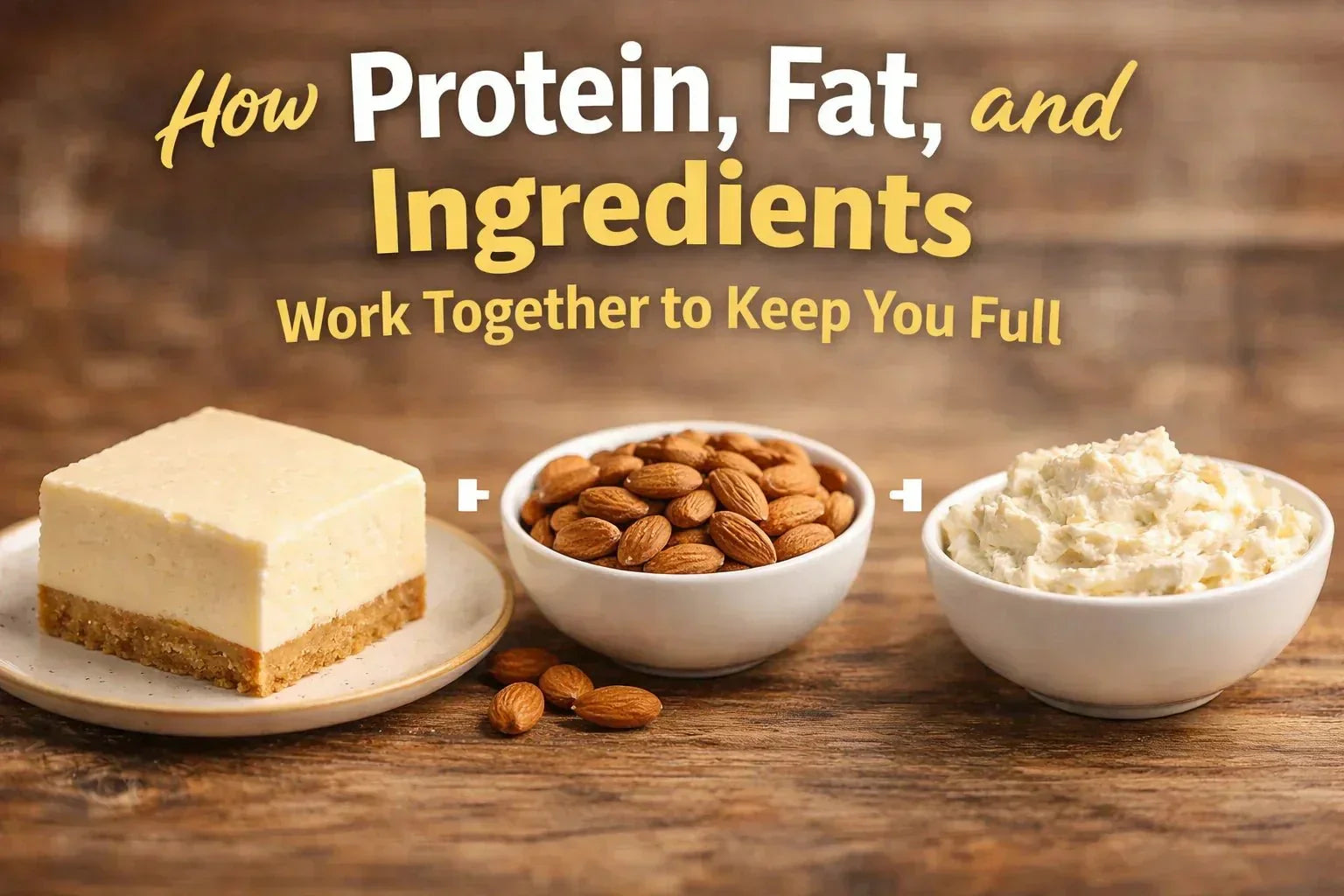
How Protein, Fat, and Ingredients Work Together to Keep You Full
Why Protein Alone Isn’t Always Enough
Protein is often praised as the most filling macronutrient — and for good reason. It plays a key role in satiety, muscle support, and blood sugar balance.
But protein doesn’t work in isolation.
When protein snacks are stripped of natural fats or paired with highly processed ingredients, they may digest too quickly to keep you satisfied for long.
That’s why some high-protein snacks still leave people reaching for more food soon after eating.
If you’ve ever felt confused by high-protein snacks that still leave you hungry, we break down the root of that issue in our article on why many protein snacks don’t actually keep you full.
The Role of Fat in Satiety
Dietary fat plays an important supporting role in how full you feel after eating.
Healthy fats:
- Slow digestion
- Help regulate hunger hormones
- Extend the feeling of fullness
- Improve satisfaction and taste
When protein is paired with natural fats, the body processes it more gradually. This helps prevent the quick rise-and-fall hunger cycle that can happen with low-fat, ultra-processed snacks.
Why Clean Ingredients Matter
Beyond protein and fat, ingredient quality has a major impact on how snacks affect appetite.
Highly processed snacks often contain:
- Artificial sweeteners
- Preservatives
- Fillers and binders
- Seed oils
These ingredients may help with shelf life or cost, but they can interfere with normal hunger cues and leave people feeling unsatisfied.
Clean ingredients allow the body to recognize food as food — not a chemistry experiment.
Protein Digestion and Fullness Signals
Satiety is influenced by hormones such as:
- Ghrelin (hunger)
- Leptin (fullness)
- Peptide YY (digestion signaling)
Whole-food protein sources, combined with fats and minimal processing, support a more balanced hormonal response. This helps the body register that it has eaten enough.
Highly refined protein snacks may digest too quickly to trigger the same response.
Why Texture and Density Make a Difference
The physical structure of food also matters.
Dense, baked, or creamy snacks tend to:
- Take longer to digest
- Feel more substantial
- Signal fullness more effectively
This is why some snacks “feel like a meal” while others feel forgettable, even with similar nutrition numbers.
Choosing Snacks That Actually Satisfy
Instead of focusing only on protein grams, look for snacks that offer:
- Whole-food protein sources
- Natural fats
- Short ingredient lists
- Minimal processing
These factors work together to support fullness, steady energy, and fewer cravings between meals.
A Smarter Approach to Protein Snacking
Protein snacks should support your day — not create a constant cycle of hunger.
When protein, fat, and clean ingredients are thoughtfully combined, snacks can be both nourishing and genuinely satisfying.
That’s the difference between eating for numbers and eating for how food actually makes you feel.

Leave a comment
This site is protected by hCaptcha and the hCaptcha Privacy Policy and Terms of Service apply.